What if you could travel to places on Earth where the landscape looks completely unreal?
Imagine a lake that turns pink.
A desert covered in giant rocks.
A cave filled with crystals.
A forest where trees look thousands of years old.
A valley so dry that almost nothing survives.
These places aren’t from science-fiction movies.
They are real locations on our own planet.
Let’s explore some of the strangest and most fascinating places on Earth.


🩷 1. Lake Hillier – The Mysterious Pink Lake
On Middle Island in Western Australia is Lake Hillier, famous for its striking pink appearance.


From above, the lake can look as though someone poured pink paint into a giant natural basin.
Its color is associated with microorganisms and the lake’s unusual chemical conditions.
🤯 The Strange Part
The surrounding ocean is blue.
The lake can appear pink.
And the two bodies of water are separated by only a narrow strip of land.
🌋 2. Danakil Depression – One of Earth’s Harshest Landscapes
In northeastern Ethiopia lies the Danakil Depression, an extreme environment known for intense heat, salt formations and colorful geothermal features.


The region lies in an area where tectonic plates are pulling apart.
That geological activity contributes to the region’s remarkable landscape.
Bright yellow, orange and green colors can appear around some geothermal areas.
It looks almost like an alien planet.
🌳 3. Socotra – An Island of Strange Trees
Off the coast of Yemen lies the island of Socotra.


Socotra is famous for unusual plants found nowhere else.
One of its most recognizable trees is the dragon blood tree, with a distinctive umbrella-like shape.
The island’s long geographic isolation allowed unique species to evolve.
🌍 It Looks Like Another Planet
The combination of unusual trees, rocky mountains and dry landscapes gives Socotra an appearance unlike many other places on Earth.
💎 4. Naica Crystal Cave – A Cave of Giant Crystals
Deep beneath the ground in Mexico is the famous Cave of the Crystals near Naica.


The cave contains enormous gypsum crystals.
Some are several metres long.
The crystals formed under unusual geological conditions involving mineral-rich groundwater and heat over very long periods.
💎 Nature’s Underground Architecture
These aren’t small crystals that fit in your hand.
They can be larger than a person.
🏜️ 5. The Atacama Desert – Almost No Rain
Chile’s Atacama Desert is one of the driest places on Earth.


Some areas receive extremely little precipitation.
The landscape contains salt flats, rocky valleys and volcanic mountains.
Because of its exceptionally dry conditions, parts of the Atacama have been used by scientists to study environments that resemble some aspects of Mars.
🌊 6. The Great Blue Hole – A Giant Underwater Circle
Off the coast of Belize is the famous Great Blue Hole.


From above, it appears as an almost perfect dark-blue circle surrounded by lighter Caribbean water.
It is a massive marine sinkhole formed through geological processes over thousands of years.
Divers have explored its underwater depths and discovered fascinating geological structures.
🧊 7. Blood Falls – A Red Waterfall in Antarctica
Antarctica contains one of the strangest-looking natural features on Earth: Blood Falls.


Red-colored water flows from the Taylor Glacier.
It may look like blood pouring from the ice.
But the explanation is geological and chemical.
The water contains iron-rich material that becomes oxidized when it reaches the surface, producing the reddish color.
🧊 Imagine Seeing This
A frozen white landscape…
and suddenly a red streak appears across the ice.
It looks impossible.
But it’s completely natural.
🏜️ 8. White Desert – Egypt’s Strange Rock Formations
Egypt’s White Desert contains unusual chalk rock formations shaped by erosion.


Wind and weather gradually sculpted the soft rock.
Some formations resemble giant mushrooms, animals or abstract sculptures.
There are no two formations exactly alike.
🌈 9. Fly Geyser – A Man-Made Accident That Became a Natural Wonder
In Nevada, United States, is Fly Geyser, famous for its brightly colored mineral formations.


The feature began after drilling activity created a pathway for geothermal water.
Over time, minerals accumulated around the opening.
Microorganisms also contribute to the striking colors.
The result is a bizarre-looking formation rising from the desert.
🏔️ 10. Chocolate Hills – Hundreds of Strange Hills
On the Philippine island of Bohol are the famous Chocolate Hills.


Hundreds of rounded hills cover the landscape.
During the dry season, vegetation can turn brown, giving the hills their chocolate-like appearance.
The exact geological story is complex, but erosion and limestone geology played important roles in shaping the landscape.
🌲 11. Crooked Forest – Trees With Mysterious Shapes
Near Gryfino in Poland is a small forest famous for unusually curved pine trees.


The trees have curved trunks that bend dramatically near the ground.
The exact reason for their unusual shape remains uncertain.
Several explanations have been suggested, but there is no universally accepted answer.
And that’s what makes the forest even more intriguing.
🏔️ 12. The Rainbow Mountains of Peru
In Peru’s Andes are mountains with naturally colorful layers.


Different minerals contribute to the red, green, yellow and other colors visible across the slopes.
From a distance, the mountains can look digitally edited.
But the colors are geological.
🌊 13. Pamukkale – White Pools on a Mountain
Turkey’s Pamukkale looks almost like a snowy hillside.
But the white terraces are actually made from mineral deposits.


Thermal water flows over the terraces and deposits calcium carbonate.
Over long periods, this creates the brilliant white landscape.
🪨 14. Giant’s Causeway – Thousands of Stone Columns
On the coast of Northern Ireland is Giant’s Causeway, a remarkable landscape of interlocking basalt columns.


The columns formed when thick lava cooled and contracted.
The cracking process produced distinctive geometric shapes, many of them roughly hexagonal.
🧩 Nature Loves Patterns
Humans often associate geometric patterns with architecture.
But nature can create them without a designer.
🌌 15. Waitomo – A Starry Sky Inside a Cave
New Zealand’s Waitomo caves contain glowing organisms that illuminate the darkness.


When visitors look upward from the darkness, tiny points of light can resemble stars.
It’s one of the most unusual natural experiences on Earth.
🤯 Why Do These Places Look So Strange?
The answer is a combination of geology, climate, chemistry and time.
Nature doesn’t build landscapes according to human ideas of what looks normal.
Instead, rocks are shaped by:
🌋 Volcanoes
🌊 Water
🌬️ Wind
🧊 Ice
☀️ Heat
🌧️ Rain
🧪 Chemical reactions
🌍 Tectonic movements
Over enormous periods of time, these forces can create landscapes that seem impossible.
🧠 The Most Interesting Thing About These Places
Many of these locations look strange because they combine conditions that rarely occur together.
For example:
Extreme heat + minerals + groundwater = unusual geothermal colors
Ancient rock + erosion = bizarre formations
Glaciers + iron-rich water = red ice
Isolation + evolution = unique plants
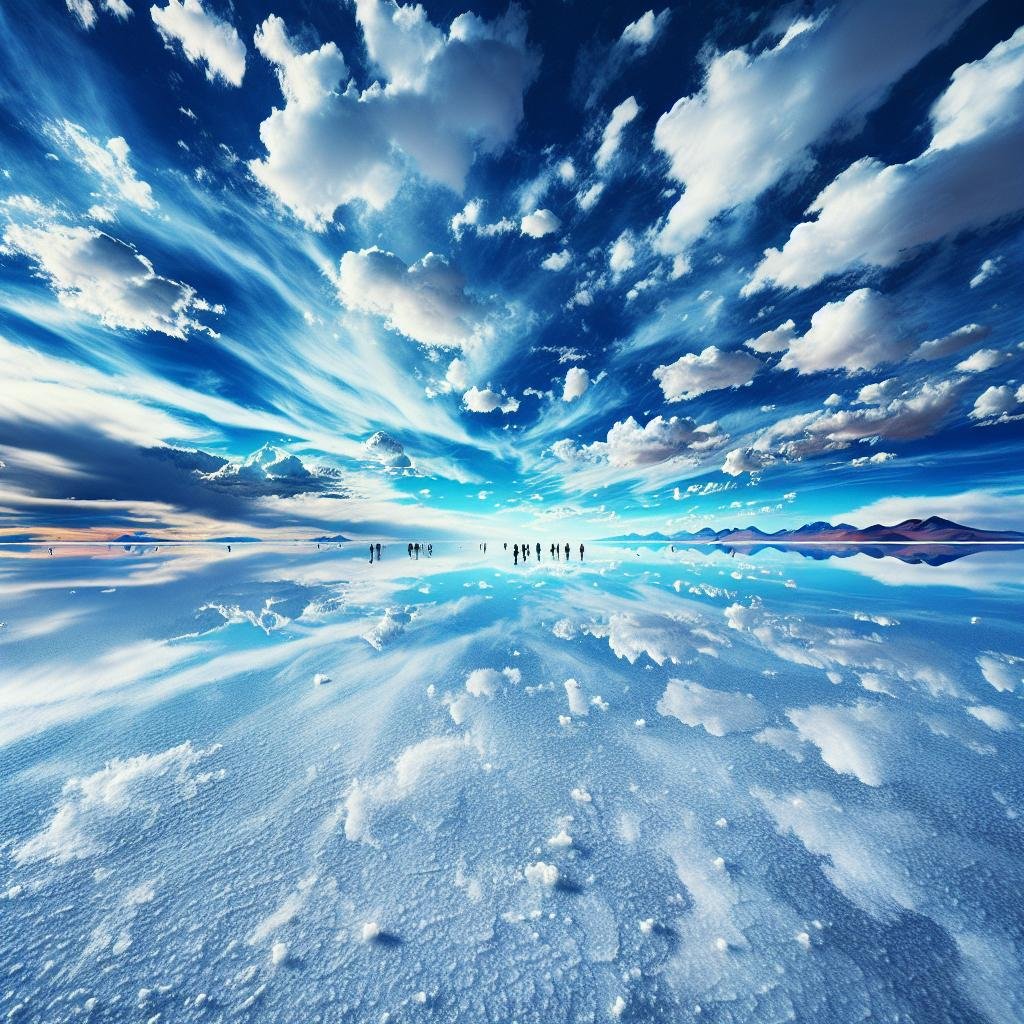
Salt + shallow water + perfectly flat terrain = giant natural mirror
Earth doesn’t need special effects.
Earth is already full of them.
🤯 Amazing Facts at a Glance
🩷 Some lakes can naturally appear pink.
💎 Giant crystals can grow deep underground.
🧊 Antarctica has naturally occurring red-colored water.
🌳 Isolated islands can contain plants found nowhere else.
🏜️ Some deserts are so dry that they resemble Mars.
🪨 Cooling lava can create remarkably geometric rock formations.
🌈 Minerals and microorganisms can create spectacular natural colors.
✨ Living organisms can make caves look like starry skies.
🌟 Final Thoughts
We often imagine that strange worlds exist only in space.
But our own planet already contains landscapes that look completely alien.
A pink lake.
A red waterfall.
A crystal cave.
A forest of strange trees.
A desert covered with bizarre rocks.
A giant underwater hole.
These places show just how creative natural processes can be.
Earth isn’t just a planet where life exists.
It is a planet that is constantly creating new shapes, colors and landscapes.
And somewhere around the world, nature is probably creating something even stranger that we haven’t discovered yet.
❓ Frequently Asked Questions
What is the strangest place on Earth?
There is no single answer because “strange” is subjective. Places such as Socotra, Danakil Depression, Blood Falls and Naica’s crystal caves are among the most unusual.
Why is Lake Hillier pink?
Its color is associated with microorganisms and the lake’s highly saline environment.
Why is Blood Falls red?
Iron-rich material in the water becomes oxidized at the surface, producing its reddish appearance.
Why does Socotra have unusual plants?
Its geographic isolation allowed many unique species to evolve.
How were Giant’s Causeway’s columns formed?
They formed from cooling basaltic lava, which contracted and cracked into distinctive columns.
Why does the Atacama Desert look like Mars?
Its extremely dry climate, rocky terrain and volcanic landscapes can resemble some aspects of the Martian surface.
Leave a Reply